All Articles
Honest reviews, real comparisons, and the guides we wish we'd had. 96 articles
Why Chinese EVs Are Better for the Planet (and Your Wallet)
I hear the same argument from EV skeptics on a regular basis: "Sure, EVs don't have a tailpipe, but what about the manufacturing? What about the mining? What about the shipping?" These are fair questions. I've asked them myself. And after spending months digging into the lifecycle emissions data, supply chain structures, and manufacturing processes behind Chinese EVs, I've come to a conclusion that surprised even me.
Latest
Chinese EV Apps & Connected Features: What Works in Canada
I'll be honest, the first time I opened a BYD companion app and saw just how much it could do, I was genuinely impressed. Remote climate pre-conditioning. Real-time battery status. Charging scheduling. Vehicle location. Door lock and unlock. Dashcam footage downloads. Sentry mode control. Some of these apps make Tesla's app look restrained, and Tesla basically invented the "your phone is your car key" concept.
How to Read an EV Spec Sheet (Without Getting Confused)
When I first started digging into Chinese EV specs, I'd stare at a table full of numbers and realize I had no idea which ones should actually influence my buying decision. Battery capacity, motor power, torque, drag coefficient, it all blurs together if nobody explains what these numbers mean in practice.
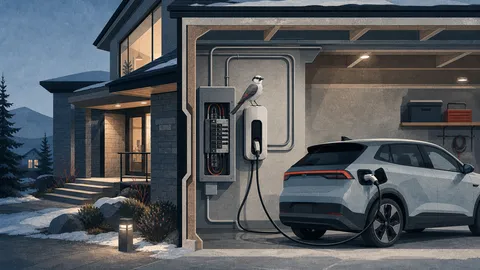
Best EV Chargers for Canadian Homes (2026)
If you've read our Charging at Home in Canada guide, you already know that a Level 2 home charger is the single best upgrade you can make as an EV owner. It turns charging from a chore into a non-event, plug in, sleep, wake up full. But that guide covered the big picture. This one answers the next question: which charger should you actually buy?
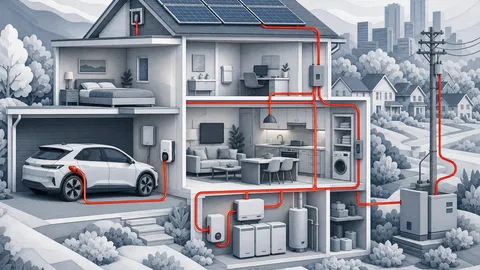
Bi-Directional Charging (V2H/V2G): Which Chinese EVs Support It?
Here's something I think about a lot: your electric car carries 50-80 kWh of stored energy everywhere it goes. That's roughly two to three days' worth of electricity for an average Canadian home. Most of the time, the car is just parked, at home, at work, at the grocery store. All that energy, doing nothing.
WLTP vs EPA vs CLTC: Which Range Number Should You Trust?
If you've been following the Chinese EV market at all, you've probably noticed something suspicious: the range numbers look almost too good. A BYD Dolphin with 427 km of range? A BYD Seal with 650 km? A Zeekr X with 560 km? These numbers sound like they blow away everything from Tesla, Hyundai, or Chevrolet.
EV Terminology: The Complete Glossary
When I first started exploring EVs, I was overwhelmed by the alphabet soup. kWh, CCS, LFP, WLTP, SOC, BMS, it felt like the industry was deliberately trying to confuse people. Turns out most of these concepts are straightforward once someone explains them without jargon, and that's exactly what I'm going to do here.

The Tariff Timeline: What Happens After Canada's EV Trade Deal
We're now nine months into Canada's Chinese EV experiment. The first BYD Dolphins and MG4s are on Canadian roads. Chery is opening dealerships. The 6.1% tariff and 49,000-unit import quota are in effect, and, so far, the sky hasn't fallen.
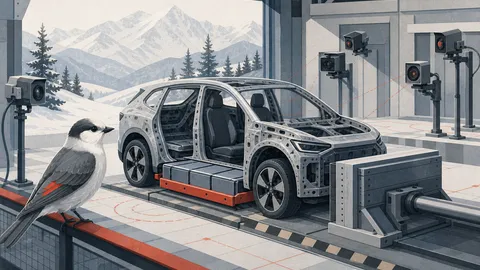
Chinese EV Safety: What Canada Actually Requires
I keep running into the same worry from people considering a Chinese EV: "But are they safe enough for Canada?" And I get it. It's a reasonable question when you're looking at brands you haven't grown up with. But here's what I want you to understand before we go any further: Transport Canada doesn't grade on a curve. There is no "Chinese car" safety standard and "everyone else" safety standard. There is one standard. Every manufacturer meets it, or they don't sell here. Full stop.
EV Insurance Province by Province: What Chinese EVs Cost to Insure
I covered the general picture of insuring Chinese EVs in our Insuring a Chinese EV in Canada guide. But the more I dug into the province-by-province numbers, the more I realized a general overview doesn't cut it. The difference between insuring the exact same car in BC versus Ontario can be $1,500+ per year. That's not a rounding error; that's a monthly car payment.